People thinking of building a detached house usually ask the same first question: how much does it cost per square metre? There is no single answer. Two houses of the same size can cost twice as much as each other depending on the site, the design and the materials. In this article we first give the current 2026 figures, then explain the items that drive the cost. Knowing them from the start is the way to set a realistic budget.
Current Figures for 2026
Every year the Turkish Ministry of Environment, Urbanisation and Climate Change publishes approximate unit costs by building class. The 2026 values were published in the Official Gazette no. 33157 on 3 February 2026. The official unit costs per square metre for detached houses are:
| Building | Class | Official unit cost | Current estimate (for 2026) |
|---|---|---|---|
| Rural village and highland houses (under 200 m² gross) | II-C | 15,100 TL/m² | 18,120 TL/m² |
| Detached and semi-detached houses (under 200 m² gross) | III-B | 21,050 TL/m² | 25,260 TL/m² |
| Detached and semi-detached houses (200 to 500 m² gross) | III-C | 23,400 TL/m² | 28,080 TL/m² |
| Detached and semi-detached houses (500 m² gross and above) | IV-B | 33,900 TL/m² | 40,680 TL/m² |
The official values were set in February 2026. To account for rises in materials and labour during the year, the “Current estimate” column raises them by 20%. All values exclude VAT. They include overheads and the contractor’s profit, but not the land, utilities or external works. For example, with the current estimate a house of 180 m² gross costs about 4.5 million TL, and one of 300 m² gross about 8.4 million TL (for 2026, excluding VAT).
These figures are published mainly to calculate architectural and engineering fees, and they are not a contractor’s quote. We have updated the market estimates by 20% in the same way. The range is wide depending on quality and location (for 2026):
- Shell construction: roughly 12,000 to 20,500 TL/m²
- Turnkey, mid-range: roughly 26,500 to 42,000 TL/m²
- Turnkey, high-end and villas: roughly 48,000 to 66,000 TL/m² and above
This update is backed by official data. According to TurkStat, the construction cost index rose by 30.80% in September 2026 compared with the same month a year earlier. In Istanbul, labour and transport costs keep prices towards the upper end of these ranges. The real cost, however, depends on how the following items take shape in your own project.
1. The Site, the Soil and the Slope
The first factor is the place where the house will be built. If the soil investigation shows weak ground, the foundations become heavier and more expensive. On a sloping site, retaining walls, excavation and fill add significantly to the budget. On land that is hard to reach, the cost of transporting materials and machinery also rises.
2. Utility Connections
In the city, electricity, water and sewage connections are usually in place. On a rural site, bringing these connections to the plot and, if needed, drilling a well, installing a water tank or a treatment system are separate costs. Look into this before buying the land.
3. Size and Form of the House
The total cost grows with the floor area, but the cost per square metre does not always grow at the same rate. What really makes the difference is the complexity of the form. Plans with many corners, cantilevers, wide spans and spaces on different levels make both the structure and the workmanship more demanding. A simple, well-composed form can offer the same quality of life for less.
4. Structure and Shell
Reinforced concrete, steel and timber structures differ in cost, construction time and the possibilities they offer. The shell, meaning the foundations, the structure, the walls and the roof, makes up a large part of the total cost. Türkiye is an earthquake country, so this is not the place to look for savings.
5. Finishes and Choice of Materials
The biggest swings in the budget usually come from the finishes. Windows and glazing, façade cladding, floor and wall finishes, doors, the kitchen, bathrooms and sanitary ware can take the same house to very different costs. Large glazed surfaces bring the view inside, for example, but thermally broken window systems are a significant item.
6. Building Services, Heating and Energy
The choice of heating system shapes both today’s cost and future running costs. A boiler with radiators, underfloor heating, a heat pump or solar panels each have different upfront and operating costs. Good insulation and the right orientation may raise the initial investment slightly, but they clearly reduce energy bills over the years.
7. Landscape and External Works
Garden walls, terraces, paths, parking, a pool and planting are often left to the end of the budget and underestimated. On sloping sites in particular, the landscape can make up a noticeable share of the total cost.
8. Design, Permit and Inspection Costs
Architectural and engineering design, the soil investigation, surveying, permit fees, the building inspection fee and connection charges are not construction costs, but they are unavoidable. A well-prepared design may look like an expense here, yet it lowers the total cost by reducing mistakes and changes during construction.
9. Time, Labour and Price Changes
The longer construction takes, the more it is exposed to rising prices for materials and labour. The availability of skilled builders in the area also affects the cost. A planned schedule, with materials chosen and ordered on time, reduces both delays and surprises.
How to Keep the Cost Under Control
- Get the brief right. Every square metre you will not use is built for nothing and heated for years.
- Choose a simple form. Complexity is the quickest way to add cost.
- Choose materials during design. Decisions made on site are both expensive and rushed.
- Have construction documents and quantities prepared. Ask contractors to bid on the same set of drawings and compare.
- Set aside part of the budget for the unexpected.
- Have construction followed by someone who knows the design. A mistake noticed on site is far cheaper to fix than one noticed later.
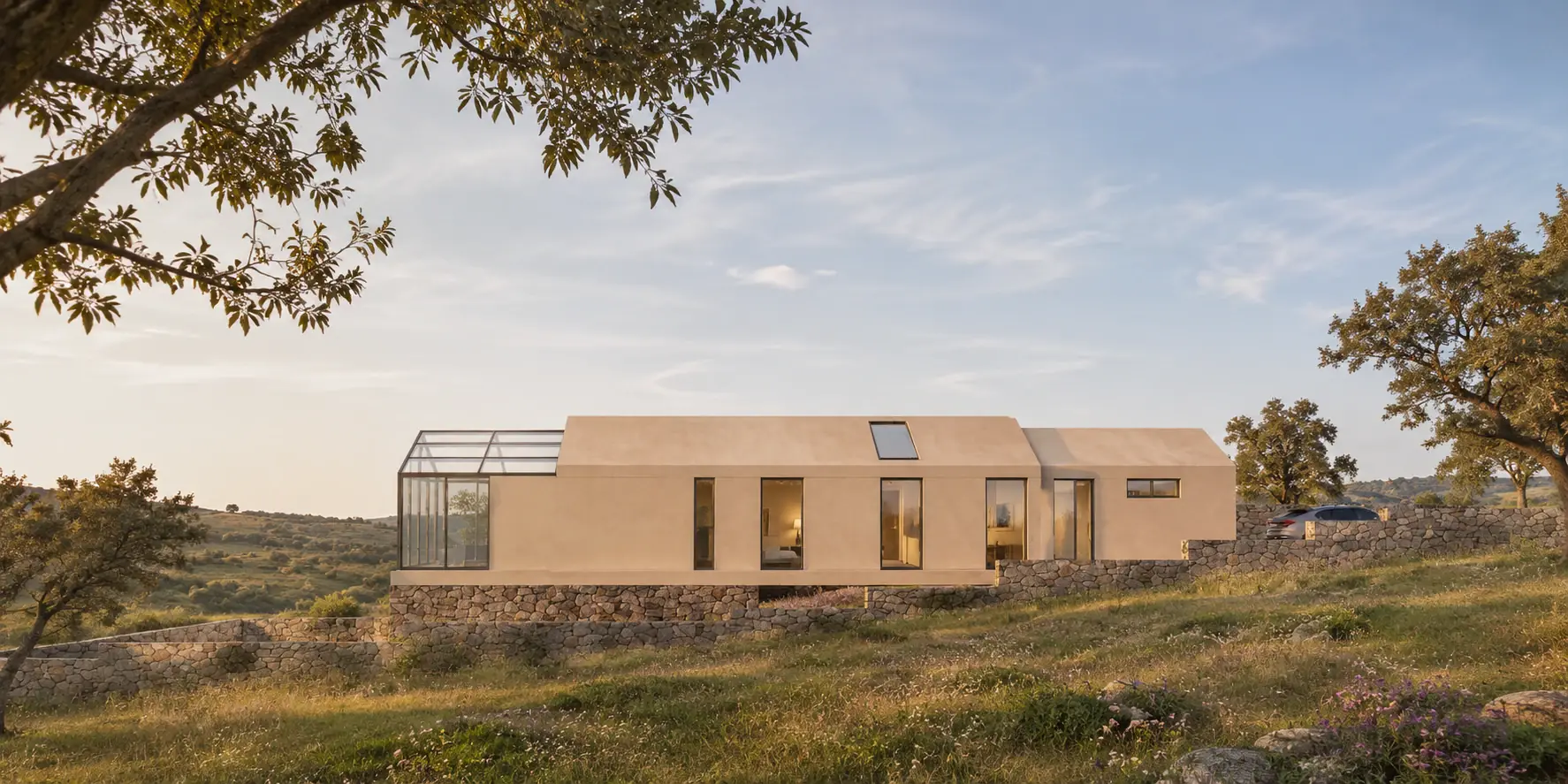
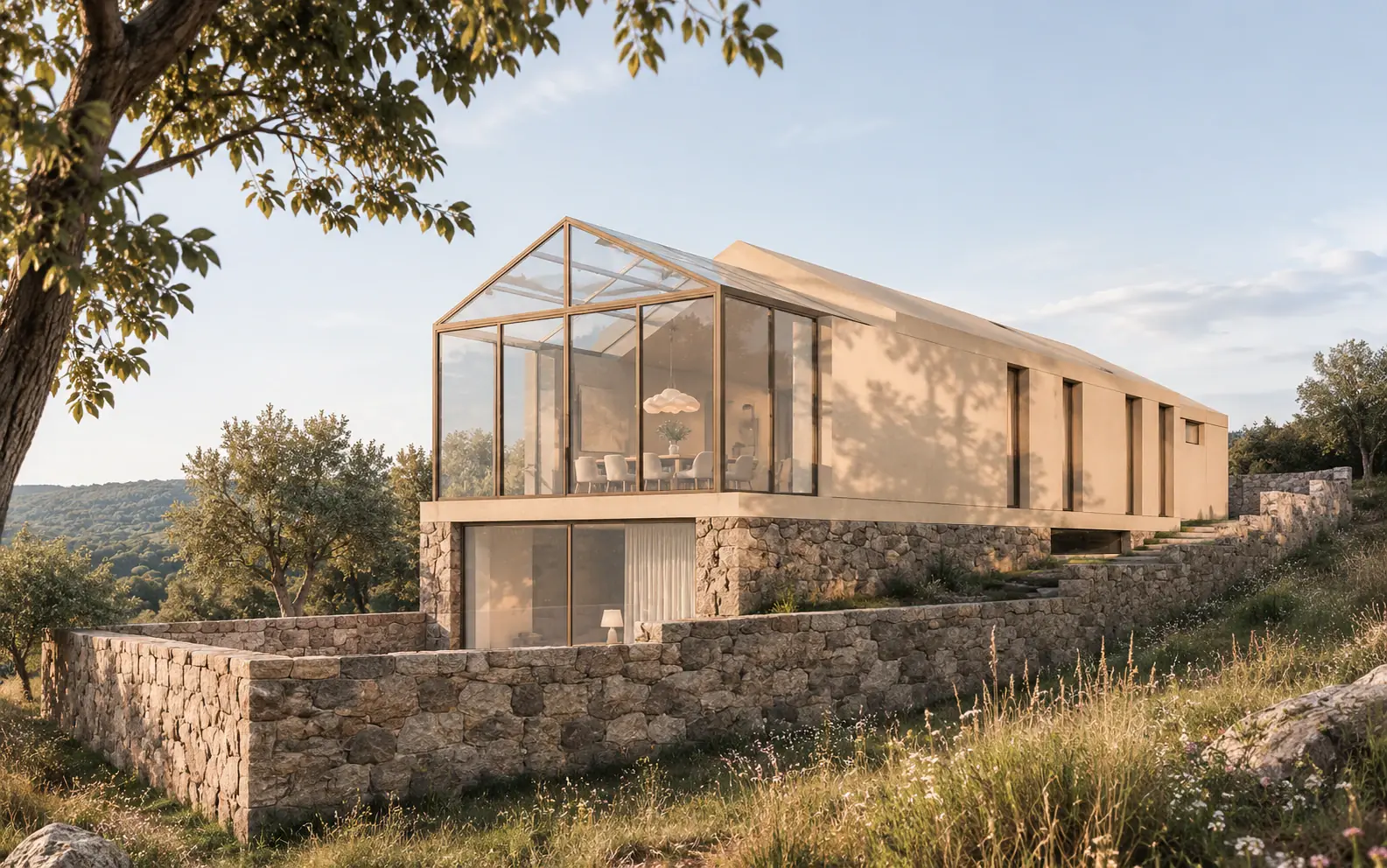
At G Güneş House in Çatalca, a simple gabled form, a base clad in natural stone and balanced openings aim for both a strong architectural character and a controlled budget. Get in touch with us about your detached house.
This article is for general information only. Figures are based on the official notice and market estimates published as of November 2026. Costs vary with location, time and project. A precise budget requires quantities and a cost estimate prepared for your own project.